Chimpanzee Habituation Experience
Spend a full day with researchers observing semi-habituated chimps in Kibale Forest
The Ultimate Chimpanzee Encounter: Dawn to Dusk with Our Closest Relatives
The Chimpanzee Habituation Experience (CHEX) offers participants a rare opportunity to spend an entire day alongside researchers as they work with semi-habituated chimpanzee communities in Kibale Forest National Park. This isn't tourism—it's participation in active scientific work that has profound conservation implications and delivers an incomparably deep wildlife encounter.
Unlike standard chimpanzee trekking—where you spend a maximum of one hour with fully habituated chimps in groups of up to 8 visitors—the habituation experience allows you to observe chimps from morning wake-up until evening nest-building, typically 6 to 12 hours of direct observation. You join a small team of maximum 4 visitors alongside experienced researchers and UWA rangers, following chimps wherever their daily activities take them.
Understanding Habituation
Habituation is the gradual process of accustoming wild chimpanzees to neutral human presence. When researchers first encounter a wild chimp community, the animals flee at human approach. Over years of patient, consistent, non-threatening exposure, chimps learn that these particular humans pose no threat and eventually tolerate observation at close range. This is the foundation that enables all chimpanzee tourism—without habituation, you could never approach wild chimps.
Kibale Forest maintains multiple chimp communities at various stages of habituation. Fully habituated groups receive standard tourist visits. Semi-habituated groups—still learning to tolerate human presence—receive the Habituation Experience. Your participation directly advances this process: every calm, respectful visit teaches chimps that humans can be trusted, gradually preparing them for eventual regular tourism.
What Makes This Experience Extraordinary
The experience delivers exceptional value on multiple levels. Scientifically, you gain deep understanding of chimpanzee ecology, behavior, and conservation challenges from researchers who have dedicated years to this work. Emotionally, spending an entire day with wild chimps creates profound connection—you watch individuals wake, feed, squabble, reconcile, groom, play, rest, and prepare for sleep. You witness the full arc of their daily lives.
Practically, the extended duration means observing behaviors impossible to see in one hour: tool use, hunting, territorial patrols, elaborate social dynamics, and the remarkable nest-building ritual at dusk. The tiny group size (4 visitors vs. 8 for regular trekking, vs. 72 total visitors across Kibale daily) ensures exceptional intimacy. The physical challenge of following chimps through dense forest for hours adds adventure to the encounter. And the knowledge that your participation directly advances conservation work adds meaningful purpose to the experience.
What Makes This Experience Extraordinary
Dawn to Dusk Observation
Witness the complete daily cycle: chimps waking in their nests at dawn, foraging through the day, socializing, and building new nests at sunset—an experience impossible in standard one-hour treks
Active Research Participation
Join scientists conducting real habituation work. Learn methodology, assist with behavioral observations, and contribute to a multi-year effort that directly benefits conservation
Intimate Group Size
Maximum 4 participants per habituation session (versus 8 for standard trekking and 72 daily visitors across Kibale). This intimacy creates a profound, personal connection with individual chimps
Behavioral Insights
Observe complex behaviors rarely seen on short treks: tool manufacture and use, hunting, territorial patrols, political maneuvering, extended grooming sessions, and the full range of social dynamics
Family Dynamics
Watch mothers nursing infants, toddlers learning to climb, juveniles play-fighting to develop adult skills, and the complex social bonds that define chimpanzee society
Nest-Building Ritual
Witness the remarkable evening ritual as each chimp meticulously constructs a new sleeping platform—bending branches, weaving leaves, testing stability—a behavior almost never observed on standard treks
Individual Recognition
Spend enough time to learn individual personalities: the confident alpha, nervous subordinates, protective mothers, mischievous youngsters. Researchers teach you to identify key community members
Scientific Context
Your guides are researchers who explain the significance of every behavior. Transform random observation into meaningful understanding of chimpanzee ecology, evolution, and conservation
Your Full-Day Habituation Journey
⚠️ Important Note: This itinerary is highly tentative. Chimpanzee movements are entirely unpredictable—they may travel 500 meters or 5 kilometers, rest for hours or move constantly. Times are approximate and the actual experience adapts moment-by-moment to chimp behavior. Pack lunch and expect to be in the forest from before dawn until after dusk.
Essential Packing Guide for a Full Day in the Forest
⚠️ Packing Note: You will spend 10-14 hours away from your lodge, mostly in dense forest with no facilities. Pack as if you're going on an all-day hike in wet, muddy conditions. Everything you bring must be carried, so balance preparedness with weight.
Clothing Essentials
- Long-sleeved shirt & pants: Neutral/dark colors (brown, green, khaki). Skip bright colors that startle chimps.
- Waterproof rain jacket: Essential—Kibale is a rainforest. Storms can hit any time.
- Sturdy waterproof hiking boots: Ankle support critical. Trails are steep, muddy, and slippery.
- Garden/leather gloves: Helpful for grabbing vegetation for balance on steep sections.
- Gaiters (optional but recommended): Keep mud and debris out of boots.
Photography & Optics
- Camera with telephoto lens: 70-200mm or 100-400mm ideal. Good low-light performance essential (forest is dark).
- Binoculars: 8x42 or 10x42 recommended for observing chimps in canopy.
- Extra batteries: Cold mornings and long days drain batteries quickly.
- Rain cover for camera: Protect electronics during inevitable rain showers.
- Headlamp with extra batteries: Essential for pre-dawn and post-dusk hiking.
Food, Water & Essentials
- Water: 2-3 liters minimum. There's no refilling in the forest.
- Packed breakfast & lunch: Most lodges prepare this on request. Easy-to-eat, quiet foods.
- Energy snacks: Trail mix, chocolate, energy bars for sustained energy.
- Insect repellent: Forest mosquitoes and tsetse flies are present.
- Sunscreen: For breaks in forest clearings.
Health & Safety
- Personal medications: Any prescription medications you require.
- Basic first aid: Bandages, pain relievers, blister treatment.
- Anti-malarial medication: If following prophylaxis regimen.
- Hand sanitizer: No washing facilities in forest.
- Tissues/toilet paper: Pack it in, pack it out.
Your Habituation Questions Answered
Related Activities
More amazing adventures in Kibale National Park:
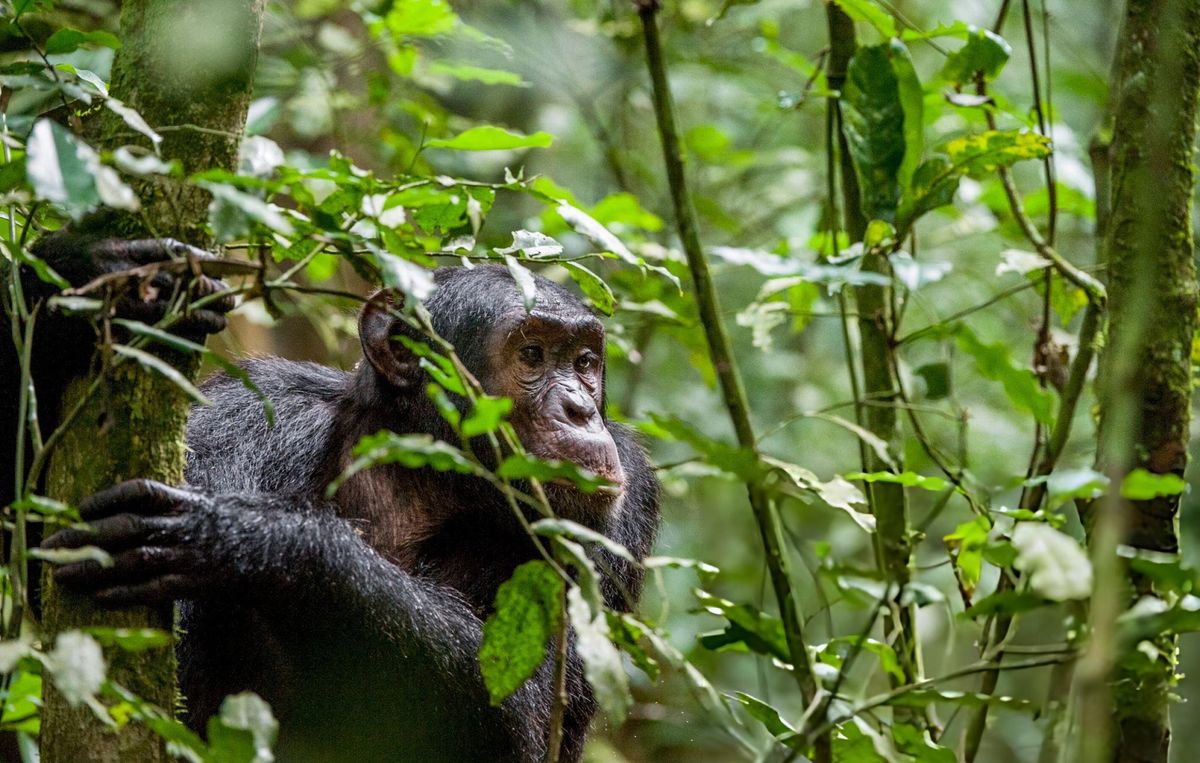
Spend a Full Day with Chimpanzees
Join researchers for the extended habituation experience, watch chimps from dawn to dusk.